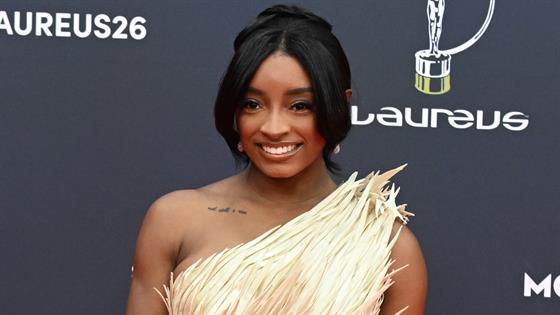
Simone Biles doesn’t just redefine greatness in gymnastics—she’s reshaping how we see athlete presence in high fashion. When she stepped onto a recent red carpet in a head-turning ensemble, whispers turned into headlines. But it wasn’t just the gown that caught attention. It was her candid breakdown of the $23,000 price tag behind her full glam look—a number that stunned casual observers but made perfect sense to those in the fashion world.
This wasn’t a flex. It was transparency. And in doing so, Biles pulled back the curtain on the true cost of celebrity styling, revealing that what appears effortless often requires an army of experts, premium materials, and meticulous time investment.
The Myth of "Just a Dress"
Most people see a celebrity in a designer gown and assume the total cost is whatever the dress retails for—if it’s even for sale. But Biles clarified that what you see is just one piece of a much larger puzzle. Her $23,000 total wasn’t for a single item. It was the sum of coordinated craftsmanship across multiple disciplines.
“We don’t just throw on a dress and walk out,” Biles said in an interview. “There are fittings, alterations, hair trials, makeup tests, jewelry loans, and emergency tailors on standby. You’re not just paying for fabric—you’re paying for precision.”
This reveals a widespread misconception: red carpet glam isn’t purchased. It’s produced. And like any high-end production, the price reflects labor, logistics, and luxury.
Breaking Down the $23,000
To understand where the money went, Biles walked through each component of her look. Here’s a realistic breakdown based on her account and industry standards:
#### 1. Designer Gown: $10,000–$12,000 Even if the dress was borrowed (common in celebrity styling), custom-fitted couture comes with hidden costs. Designers often charge for: - Custom fit adjustments by in-house tailors - Exclusive fabric sourcing - Private showroom appointments - Insurance and transportation
In Biles’ case, her custom-structured gown required 80+ hours of handwork. While she didn’t buy it outright, the production value was real—and that cost gets passed on through styling budgets or brand partnerships.
#### 2. Hair and Makeup: $2,500 Top-tier celebrity stylists don’t come cheap. Biles worked with a duo who’ve styled for major awards shows: - 4 hours of prep time - Premium products (e.g., $400 foundation, $200 setting sprays) - Travel and per-diem fees
Her voluminous updo alone used three custom hairpieces, each costing over $800. The makeup included airbrush techniques and prosthetic detailing for lighting optimization—something rarely seen but always felt on camera.
#### 3. Jewelry: $5,000 (Value, Not Cost) The diamond choker and earrings worn weren’t purchased. They were on loan from a luxury house. But that doesn’t mean $0. Insurance alone on pieces valued at $500,000+ can run $5,000 per event. Security, transport, and handling fees are baked into styling budgets—even for borrowed items.
#### 4. Stylist Fees: $3,000 Her stylist didn’t just pick the dress. They: - Held 12 fittings over three weeks - Coordinated with the designer for structural modifications - Managed crisis changes when the original fabric didn’t drape as expected - Oversaw the full timeline on event day
Top stylists charge $1,500–$5,000 per event, depending on complexity. Biles’ stylist was on call for 72 hours straight—just in case.
#### 5. Tailoring and Alterations: $1,500 Off-the-rack doesn’t exist at this level. Her gown needed: - Corset re-engineering for mobility (critical for an athlete) - Hem adjusted for her exact heel height - Hidden reinforcement at stress points
Two master tailors worked overnight to reline the bodice after a last-minute pad adjustment. That kind of urgency costs extra.
#### 6. Shoes and Accessories: $1,000 Custom Christian Louboutins, molded to her foot shape, cost $1,200. Add in clutch, shapewear, and backup footwear—and it rounds to $1,000. She didn’t keep the shoes, but the fitting and modification were non-refundable.
#### 7. Emergency Team and Logistics: $500+ A “glam emergency kit” might sound dramatic. But when you’re on a red carpet and a strap snaps? It’s essential. This includes: - A seamstress on standby - Touch-up kits with color-matched thread - Portable steamers and fabric patches - On-site transport coordination
One popped seam at a premiere can cost $10,000 in PR damage—so the $500 buffer is insurance.
Why the Number Matters
Biles didn’t share the $23,000 figure to impress. She did it to normalize the conversation around value. “People think athletes don’t care about fashion or don’t deserve to spend on it,” she said. “But this is part of my job now. I represent brands. I’m on magazine covers. Looking polished isn’t vanity—it’s professionalism.”
And she’s right. For public figures, image is equity. Every red carpet is a media event, a brand moment, a cultural statement. Biles used her platform to show that styling isn’t frivolous—it’s strategic.
What’s more, she challenged the idea that women, especially Black women, should downplay their investment in appearance. “We’re told to be ‘natural’ or ‘humble,’ but no one questions a male athlete’s suit budget,” she noted. “Why should my glam be any different?”
The Hidden Labor Behind the Look
Beyond dollars, Biles emphasized the emotional labor. “I had three panic attacks during fittings,” she admitted. “One because the dress didn’t let me breathe. One because I thought I looked ‘too much.’ One because I worried people would say I was trying too hard.”
That’s a reality often ignored: red carpet prep isn’t just expensive—it’s mentally exhausting. The pressure to be flawless, age-appropriate, on-trend, and culturally sensitive is immense.
Her team included a wellness coach who worked with her on posture, breathing, and media interaction—even practicing walking in heels on carpet vs. pavement. That added $800 to the bill but was worth it for her confidence.
What Most People Get Wrong About Celebrity Glam
There are persistent myths about high-end styling. Biles’ breakdown helped dismantle a few:
Myth 1: “They get everything for free.” Reality: Even gifted items come with costs—insurance, time, exclusivity clauses. And stylists still charge.

Myth 2: “It’s just vanity.” Reality: For athletes and entertainers, appearance impacts endorsement value, media placement, and public perception.
Myth 3: “One person does it all.” Reality: A red carpet look is a production. It involves designers, tailors, hair artists, makeup leads, brand reps, and logistics coordinators.
Myth 4: “They wear it once and trash it.” Reality: Biles has worn variations of her red carpet looks in campaigns, interviews, and brand events. The investment has long-term ROI.
How This Changes the Conversation
Biles’ transparency is part of a larger shift. More celebrities—from Lizzo to Billy Porter—are speaking openly about the cost and effort behind their fashion. This isn’t ego. It’s accountability.
When we understand that a $23,000 look isn’t about excess but about expertise, we stop shaming women for investing in their image. We start respecting the artisans behind the scenes. And we recognize that for athletes branching into entertainment and fashion, presentation is performance.
It also pressures the industry to be more inclusive. “If we’re going to charge this much for a look,” Biles said, “then the teams should reflect the people wearing them. I want more Black stylists, more LGBTQ+ designers, more women running ateliers.”
The Real Takeaway
You don’t need a $23,000 budget to look polished. But you do need to respect the craft. Whether you’re preparing for a wedding, a corporate gala, or a media appearance, invest in what matters: - Fit over brand - Comfort over trends - Professional prep over last-minute fixes
And if you’re building a public persona, treat your image as seriously as your resume. Because in today’s world, they’re often read together.
Simone Biles didn’t just wear a dress. She delivered a masterclass in visibility, value, and voice. The $23,000 wasn’t a price tag. It was a statement.
FAQ
Did Simone Biles pay the $23,000 out of pocket? Not entirely. Much of the cost was covered by brand partnerships and sponsorships. However, her team’s fees and logistics were part of her personal styling budget.
Was the dress purchased or borrowed? The gown was custom-made on loan from the designer. Biles did not keep it, but the fittings and alterations were non-refundable.
Why does celebrity styling cost so much? It’s not just the clothing—it’s the team, time, customization, insurance, and crisis management that drive up costs.
Can you get red carpet-quality looks for less? Yes. Many stylists offer scaled-down versions for events. Focus on fit, tailoring, and trusted professionals rather than big names.
Did Simone Biles face criticism for the cost? Some online commentary questioned the expense, but most responses praised her honesty and the importance of valuing creative labor.
How long did the glam process take? From initial concept to final touch-ups, the entire process spanned five weeks, with 18 hours of direct prep on event day.
Will she reuse elements of the look? Yes. The hairstyle and makeup technique were adapted for a magazine shoot, and the jewelry house used images in their campaign—showing long-term value.
FAQ
What should you look for in Simone Biles Breaks Down $23,000 Red Carpet Glam Cost? Focus on relevance, practical value, and how well the solution matches real user intent.
Is Simone Biles Breaks Down $23,000 Red Carpet Glam Cost suitable for beginners? That depends on the workflow, but a clear step-by-step approach usually makes it easier to start.
How do you compare options around Simone Biles Breaks Down $23,000 Red Carpet Glam Cost? Compare features, trust signals, limitations, pricing, and ease of implementation.
What mistakes should you avoid? Avoid generic choices, weak validation, and decisions based only on marketing claims.
What is the next best step? Shortlist the most relevant options, validate them quickly, and refine from real-world results.